
Reviewer Spotlight: Xiaoyu Ma
The quality of eNeuro depends on the effort that is generously contributed by our reviewers, who lend their expertise and time helping to ensure we publish great science. This Reviewer Recognition series introduces the research of selected reviewers, as well as their strategies for approaching peer review of a paper. Dr. Xiaoyu Ma is currently a Staff Scientist at the National Institute of Mental Health. Ma’s research explores the neural mechanism underlying irritability to help develop diagnostic tools and therapies for severe irritability.
“I always remind myself that my role is to help the authors improve their manuscripts, not simply to critique their work. I try my best to make clear, specific, and constructive comments.”
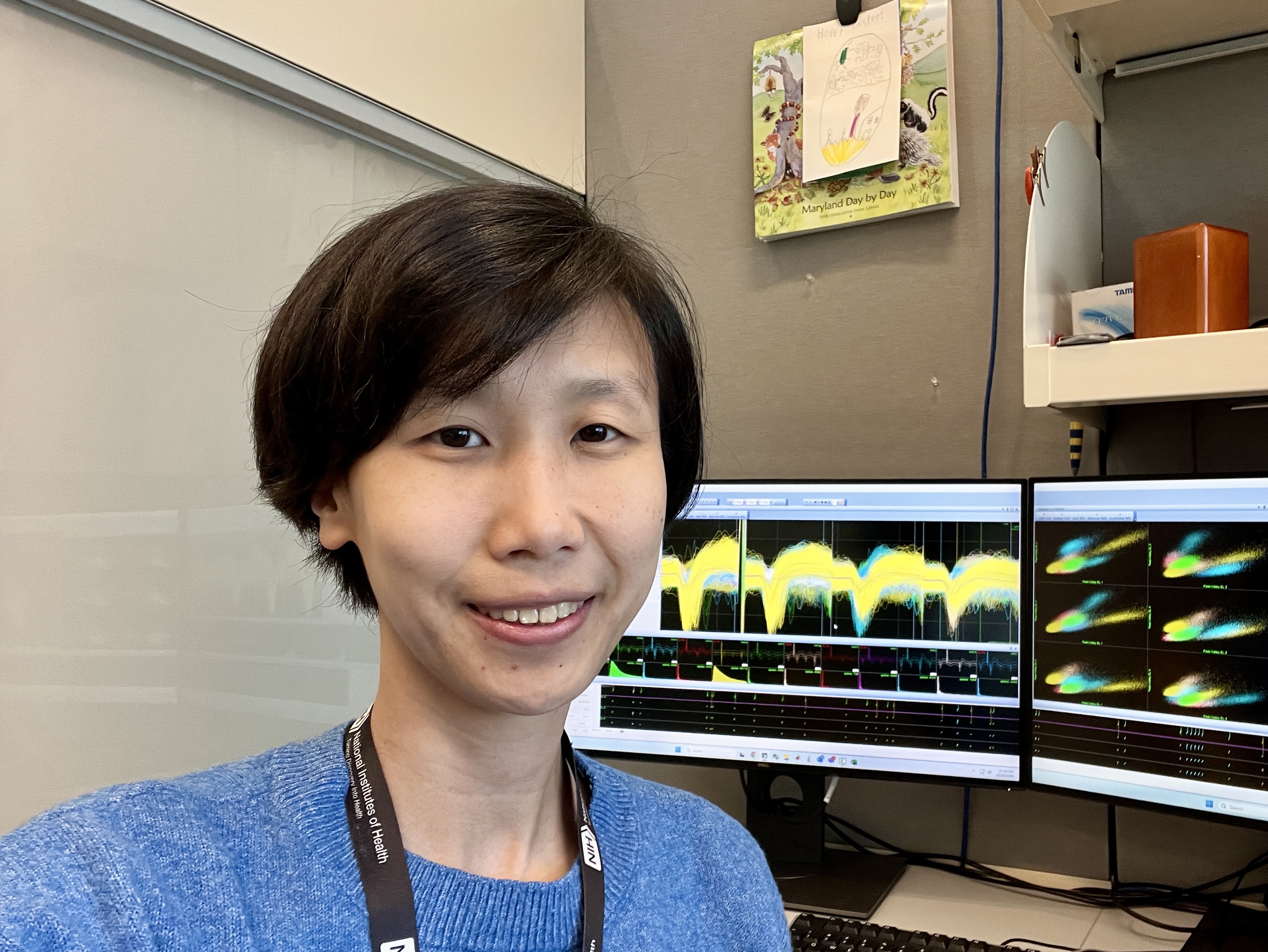
Tell us about your work.
My current research focuses on delineating the neural circuits and network activities associated with frustration. The ultimate goal of my work is to advance understanding of the neural mechanism underlying irritability and to use the knowledge to develop innovative diagnostic tools and therapies for severe irritability which is a defining symptom of Disruptive Mood Dysregulation Disorder and common in other psychiatric disorders.
What do you do when not in the lab?
In my spare time, I enjoy watercolor painting. It helps me stay calm, reflective, and balanced outside of the lab.
What advice would you share with new reviewers?
I always remind myself that my role is to help the authors improve their manuscripts, not simply to critique their work. I try my best to make clear, specific, and constructive comments.
My first piece of advice is to start the review process as soon as possible and give yourself ample time. Don’t leave it until the last day!
I usually begin by reading through the manuscript carefully and noting any sections I find unclear or concerning. Then, after rereading the paper a few more times, I cross off issues that I can resolve through closer reading. When finalizing my report, I focus on several key questions: Is the study novel, and does it meaningfully advance the field? Are the methodology and statistical analyses correct? Are the methods described in sufficient detail for replication? Are the conclusions fully supported by the data.
“No manuscript is perfect, but as a reviewer, my goal is to help make it as strong as possible.”
What is your experience as a reviewer with eNeuro's consultation review process?
I always read the other reviewer’s comments after I submit mine. What I appreciate most about the consultation session is that the reviewers can not only see each other’s feedback but also have a chance to discuss the reasoning behind it. Although the reviewers don’t always reach an agreement, this is very fair to the authors. Sometimes reviewers make mistakes, and the consultation session provides a chance to correct them quickly. This is much more efficient than waiting weeks or months when the rebuttal comes back. It’s a thoughtful and transparent process that ultimately strengthens the quality of reviews.
You are also a graduate of SfN’s Reviewer Mentor Program. What did you learn during that mentored review that you find the most valuable in your work as a reviewer now? Would you recommend the program?
I highly recommend SfN’s Reviewer Mentor Program. It is really a precious chance to have a more experienced reviewer comment on my comments. Before joining the program, I had read the reviewer guidelines and assisted other reviewers, but I was worried that I might be too picky. My mentor did not delete any of my comments and even moved one of my minor comments to a major one. I think the best part of my experience was that the mentor helped me understand the potential of my review. As long as my comments are factual, evidence-based, and reasonable, they are worth including. No manuscript is perfect, but as a reviewer, my goal is to help make it as strong as possible. The program gave me confidence and clarity in how to achieve that.
Xiaoyu Ma, PhDStaff Scientist
Section on Synapse Development and Plasticity
National Institute of Mental Health
National Institutes of Health
Learn more:
eNeuro offers authors the choice to receive double-blind review. Additionally, the Reviewing Editor and two reviewers will consult to reach a consensus on the decision and to draft a synthesis of the reviewers' comments explaining the decision. These review syntheses are published alongside each accepted paper. Learn more about eNeuro's Review Process.
FOLLOW US
 RSS Feed
POPULAR POSTS
TAGS
CATEGORIES