
Beyond the Paper: A Conversation with Zuhair Abdulla
Interviewed by Dr. Paige N. McKeon, June 3, 2026
Under repeated exposure to stress, mammals experience neural dysfunction in their medial prefrontal cortex (mPFC) that is linked to depression. In Marina Piccioto’s lab at Yale University, Zuhair Abdulla led a study using mice to explore molecular changes that occur under stressful conditions that drive synaptic changes in the mPFC and lead to maladaptive behavioral responses. The research group found extensive proteomic changes in mPFC synapses and have published their findings on ProteomeXchange, a publicly accessible repository for proteomics data.
"This is the first time I've completed a project where the molecular component was front and center, and thankfully I had a great network of scientists I was able to lean on to make sure the study was designed, run, and analyzed correctly."
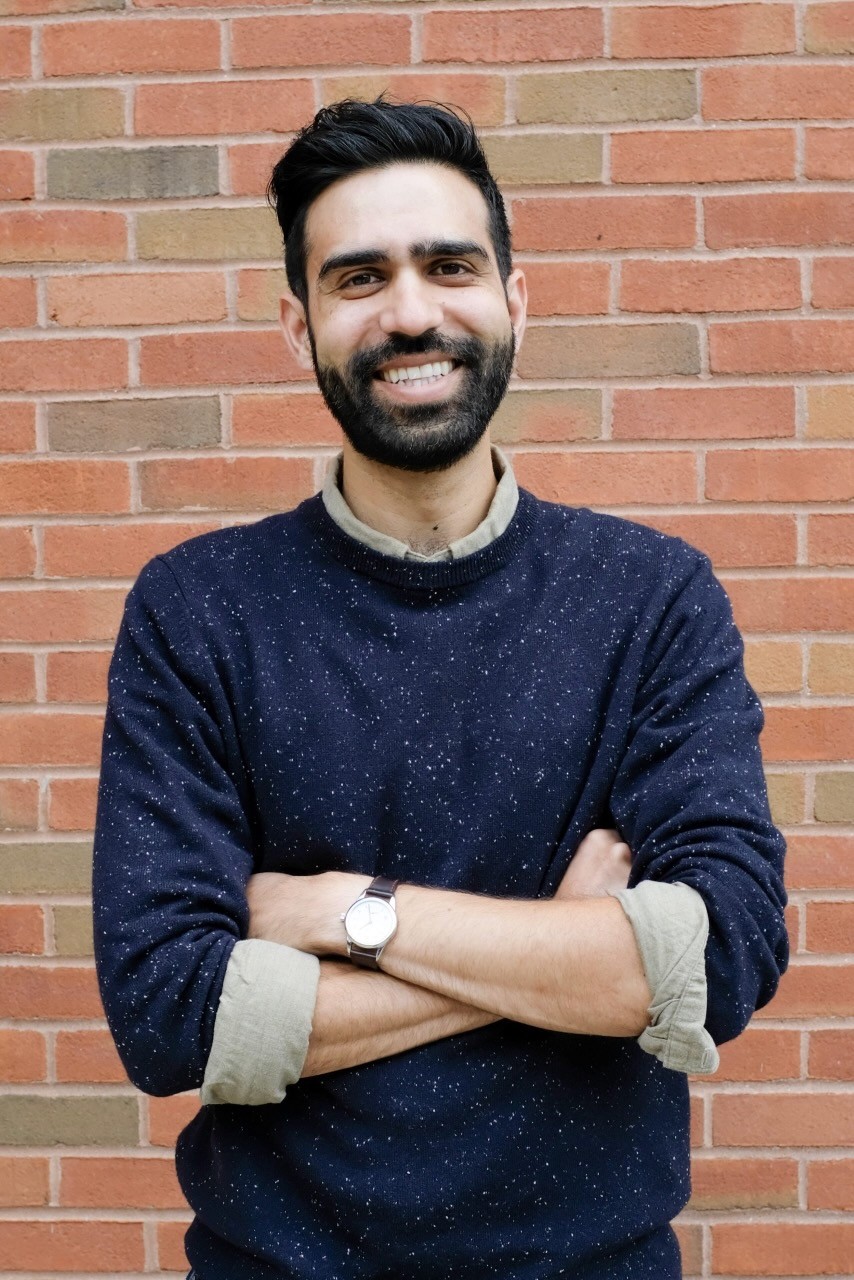
How have your experiences led to where you are now?
I didn’t take a traditional pathway to science and actually came to it as an adult. I was working a job that was fun, but I didn’t see much of a future in it, so I decided to go back to school. I thought I wanted to be a high school math teacher, but I had been developing an interest in how the brain mediates behavior. I was consuming a lot of lay literature on the subject and listening to a lot of podcasts about neuroscience, so when I started taking community college math courses, I also enrolled in some psychology classes. When I took a class called Biological Psychology, it just clicked: This is what I want to do! I transferred to a small state school that offered a bachelor’s degree in biological psychology.
When it came time for graduate school, I wanted to go to a lab that was based more in molecular neuroscience so that I could round out my education and skillset. Even then, my interests were drifting toward psychiatry, but to get a more well-rounded view of physiology, I joined a lab focused on energy metabolism in the brain and found ways to use their models to test some early hypotheses I had on mood. Toward the end of graduate school, I was dead set on studying depression, which is how I decided to pursue my post doctorate at Yale, home to a phenomenal molecular psychiatry division.
What was the strategy for developing the experimental approach in this paper?
This was a harder one for me to develop conceptually. My expertise is in behavioral neuroscience, but I've always sought to incorporate molecular work into my projects. This is the first time I've completed a project where the molecular component was front and center, and thankfully I had a great network of scientists I was able to lean on to make sure the study was designed, run, and analyzed correctly.
After our last paper, in which we showed a connection between prefrontal cortex acetylcholine signaling and learned helplessness behavior, we really wanted to understand what was driving the differences we observed. This project grew out of that question: Why was cholinergic signaling so different between our behavioral groups? We knew that less comprehensive techniques like western blotting and immunohistochemistry wouldn't capture everything we were looking for, so we made the decision to run proteomics and develop a more holistic picture of what was driving neurotransmission during learned helplessness.
"Proteomics generates a lot of data and deciding what data are actually relevant to your hypothesis is genuinely difficult! There were so many ways we could have analyzed it, so many directions we could have pursued, but in the end, I think we honed in on what mattered most and found the right way to tell the story the data had to offer."
What challenges did you run into during your experiments and how did you overcome them?
One of the biggest challenges was simply working through such a massive dataset. Proteomics generates a lot of data and deciding what data are actually relevant to your hypothesis is genuinely difficult! There were so many ways we could have analyzed it, so many directions we could have pursued, but in the end, I think we honed in on what mattered most and found the right way to tell the story the data had to offer. We were beyond excited to see just how well that story fit our hypothesis!
Did the outcomes of the experiments surprise you?
I’m not sure if “surprise” is the right word; maybe “relieved” captures it a bit better. I produced a decent amount of negative data in graduate school, so the 2024 paper we put out was really my first experience of generating a hypothesis that really bore out. I was worried it was a fluke, so when we found all the alterations around the cholinergic system in this paper, yes, there was excitement to be sure, but also an overwhelming sense of relief: Maybe I do sort of know what I’m doing here? Imposter syndrome is unfortunately something a lot of us experience, but I think a bit of that started to go away when I saw our data.
"Putting the data on ProteomeXchange was the best way to make sure that our data are open, standardized, and accessible. It means people can not only check our work but can also do the analyses that are most relevant to them."
Your proteomics data are publicly accessible through ProteomeXchange. Can you talk to us a little about this resource and how you envision these data being used?
Like I said a bit earlier, proteomics data can be massive and complicated. There’s just so much information in the datasets that this technique generates and so many ways to go about analyzing it. We found the things that were most significantly different from a statistical point of view and the things that most directly impacted the questions we wanted to answer and reported them.
That being said, there is a lot of other information. There are a lot of proteins that there isn’t a lot of information about yet. If people have other questions after reading our paper, we wanted to make sure that those people could access the data. Putting the data on ProteomeXchange was the best way to make sure that our data are open, standardized, and accessible. It means people can not only check our work but can also do the analyses that are most relevant to them. I think it’s a great way to be open with the data, and to at least provide a way for people to get the most out of it.
How was your experience with the eNeuro review process?
My experience with eNeuro was fantastic! The reviewers were appropriately critical and very specific about their requested alterations and what additional information they wanted to see. I think it really improved the paper a lot. Editors were easy to reach and very quick in their responses.
"My experience with eNeuro was fantastic! The reviewers were appropriately critical and very specific about their requested alterations and what additional information they wanted to see. I think it really improved the paper a lot. Editors were easy to reach and very quick in their responses."

"But while I’ve faced a lot of rejection, I’ve also picked up a newfound resiliency and after nearly three years of job hunting, I've decided to go back to school to become a Psychiatric Nurse Practitioner. This path will let me apply the expertise I've built in the mechanisms of psychiatric disease to make a direct impact with people who are struggling with mental health issues."
What are your career goals and how have your experiences shaped these goals?
I've always been deeply interested in understanding why some people develop depression following adversity while others do not, and I know there’s a lot more than one biological answer. Depression is a multifaceted disorder—composed of varying physiological phenomena that converge on a similar set of symptoms—which is likely why we have so many medications with so many mechanisms of action; yet, none of them work reliably for everyone. I think there's a somewhat straight line from figuring out those two things to developing a methodology for more targeted treatment: Map all the myriad ways depression can manifest physiologically then tie those mechanisms to the medications most likely to work for each individual. Easy, right?
With that said, I spent the last two and a half years of my post doctorate applying to quite literally hundreds of jobs and completely striking out. I think it comes down to a few things. Partly, there are simply a lot of us competing for a small number of positions. If you don't have the big grants or the big papers, it's easy to get passed over for those who do. That problem has been compounded by the NIH funding disruptions of the past two years, which have also made it clear that a career in academic research may not be as secure as I once believed. Industry hasn't been hiring as many PhDs as it used to, either. It's a strange time to be a scientist on the job market and I don't foresee this resolving any time soon. We now know that research funding can be cut at the whims of whoever is in charge.
But while I’ve faced a lot of rejection, I’ve also picked up a newfound resiliency and after nearly three years of job hunting, I've decided to go back to school to become a Psychiatric Nurse Practitioner. This path will let me apply the expertise I've built in the mechanisms of psychiatric disease to make a direct impact with people who are struggling with mental health issues. It also opens the door to clinical research, something I've been drawn to for a while but couldn't pursue professionally given my lack of clinical experience.
Keep up to date with ongoing projects in Marina Picciotto’s lab .
Read the full article:
mPFC Synaptosome Proteomics Reveals Novel Pathways and Muscarinic Receptor Changes in a Learned Helplessness Mouse Model
Zuhair I. Abdulla, Rolando Garcia-Milian, Ernestine Giahyue, Sofia Fertuzinhos, Florine Collin, Weiwei Wang, TuKiet T. Lam, Angus C. Nairn, and Marina R. Picciotto
FOLLOW US
 RSS Feed
POPULAR POSTS
TAGS
CATEGORIES